Why fast broadband matters
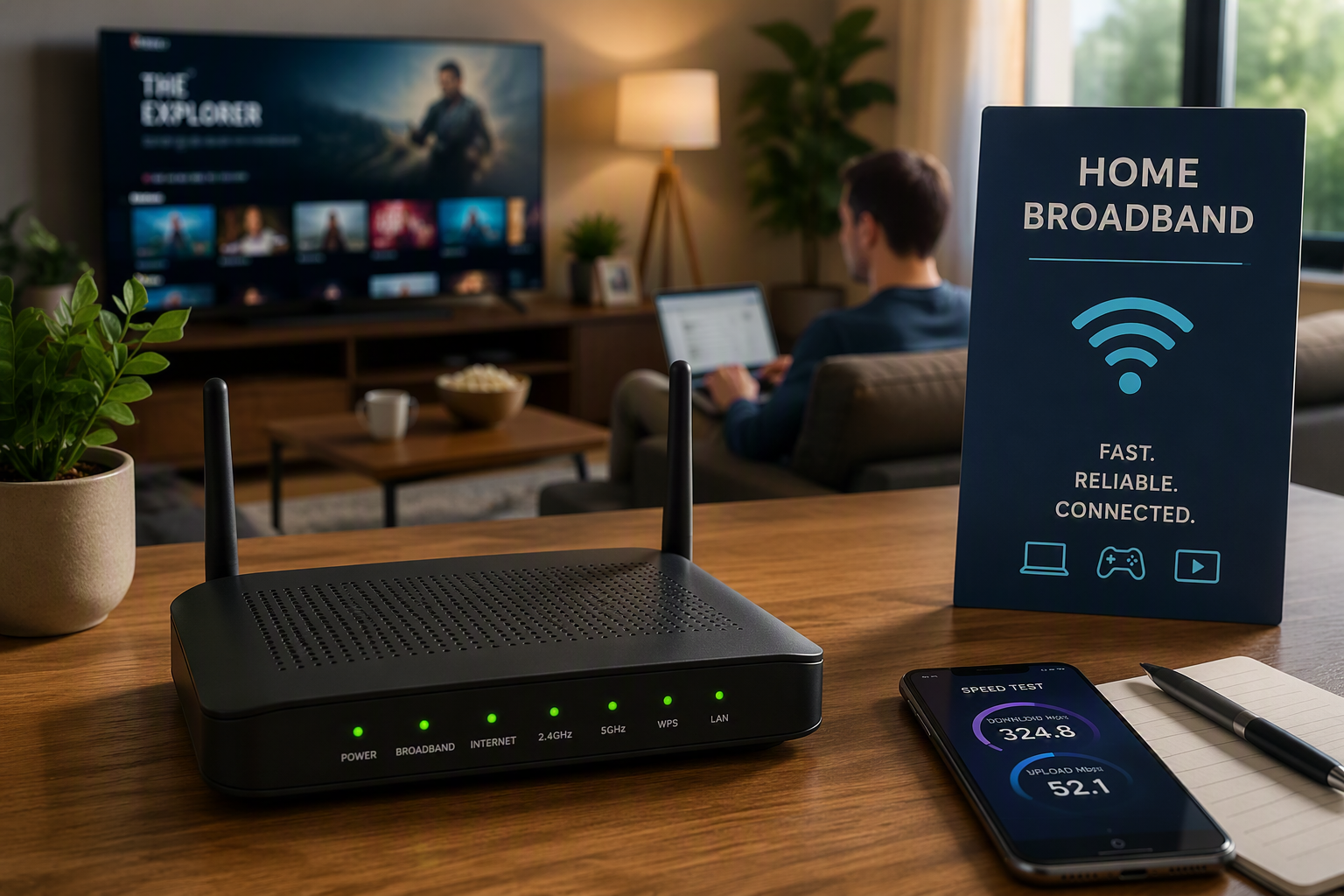
It’s been 35 years since the World Wide Web was created, and it’s hard to imagine a world without it. We rely on broadband to work from home, shop online and even socialise, with daily dependence on social media sites and services like online banking. The streaming media and online gaming industries are each worth hundreds of billions of pounds, while web browsers remain our windows onto the world and apps underpin many essential services.
Being able to access online content quickly and reliably is vitally important for most of us. But what qualifies as a fast internet connection nowadays?
The world at your fingertips
Historically, broadband could be as slow as 512Kbps, with the K standing for kilo (thousand) and bps representing the number of individual binary bits of data that connection could send or receive each second. Today, a broadband connection should be at least 10Mbps (millions of bits per second). It’s worth noting that the copper ADSL phone lines provided by Openreach typically offer far slower upload speeds than downloads, with the latter figures quoted in marketing literature. That makes sense since we tend to consume (download) more than we create (upload), but you’ll struggle to support more than a couple of connected devices at once on an ADSL line, or work from home effectively.
Fibre optic cables transfer data far more quickly than copper phone lines, but sometimes they’re used in partnership. Fibre to the Cabinet connections of between 30 and 67Mbps rely on phone lines between our homes and fibre-equipped local pavement exchange boxes. By contrast, full fibre extends directly into the home and can achieve anywhere from 100Mbps to 2Gbps (gigabits). It’s also symmetrical, so uploads happen as rapidly as downloads. That’s ideal if you’re regularly on video calls or creating your own media content.
A full fibre diet
Cruden Homes pre-install full fibre to the premises in all our new developments, because these high-speed connections offer a number of benefits to our customers:
- The fastest form of home internet connectivity minimises the risk of issues like latency (data delays) or buffering (audio or video files being interrupted as they play).
- Symmetrical connections mean uploading documents to cloud storage or sending an email happen as quickly as watching a video stream or doing an online grocery shop.
- Our homes are often bought by families who tend to have a large number of internet-enabled devices, all of which consume bandwidth – often at the same time.
- Unlike FTTC connections, full fibre extends straight into your home from the street outside, making it more reliable, with fewer connection nodes to navigate.
- It’s futureproof, ensuring your internet connection will be able to cope with data requirements for many years to come even if concepts like 8K TVs become common.
It’s cost-effective for housebuilders to integrate full fibre into a development at the groundworks stage, allowing approved internet service providers to install broadband cables alongside other utilities like water or gas pipes. Homeowners can activate a connection whenever they wish, or rely on the (also pre-installed) Openreach phone line until they’re ready to upgrade. The alternative is for broadband companies to retrofit cabling into existing streets, which involves earthworks and a lot of noise and disruption.
For people living in an existing property with slow or unreliable broadband, or tenants who can’t upgrade the connection in their current rental property, the prospect of pre-installed full fibre is a key benefit of purchasing a new-build property. Find out more about the benefits of full fibre broadband by speaking to your Cruden Homes’ sales representative.
Back to Latest Posts