
DIY Tool Bag Essentials
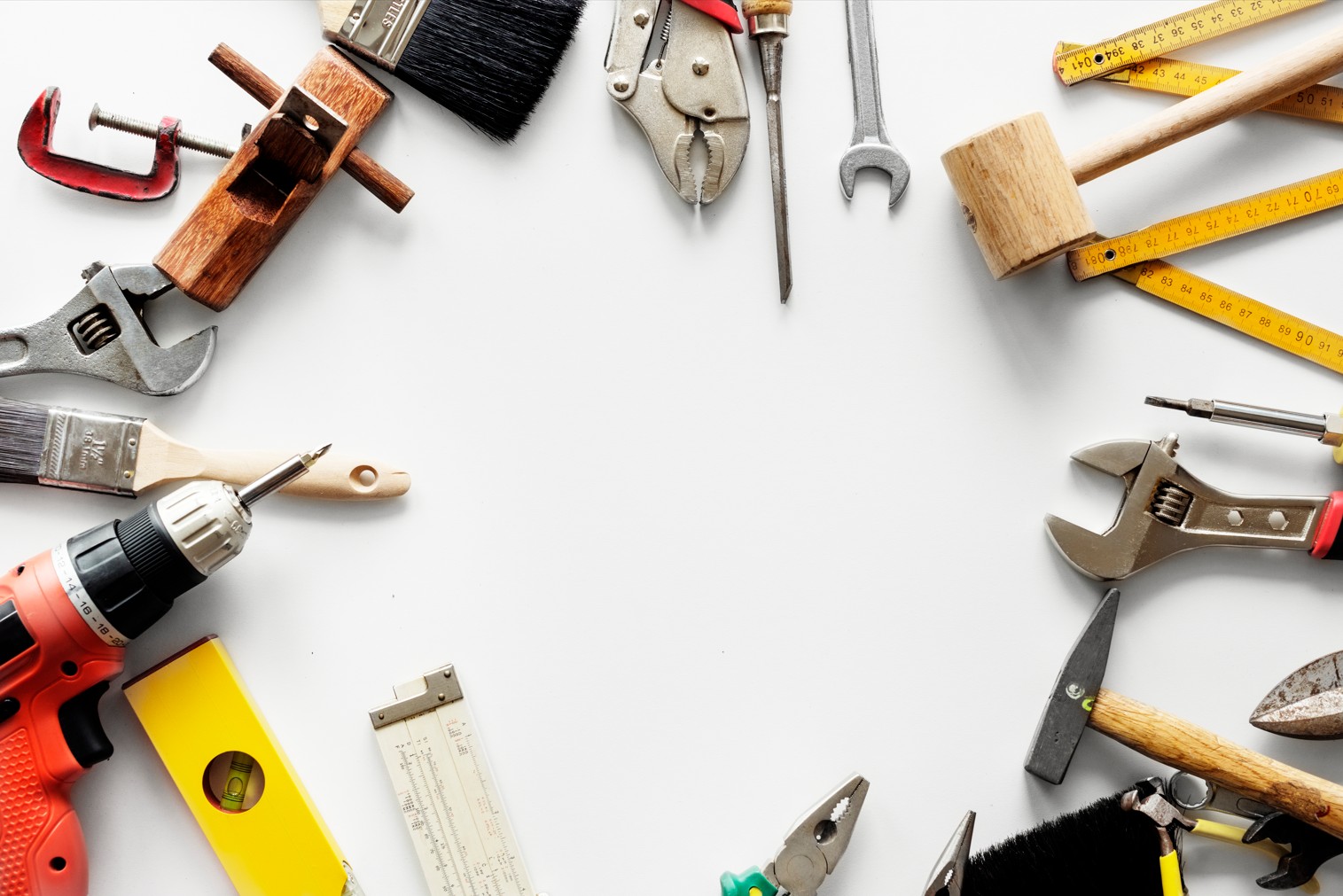
Whether you’re a tenant, a homeowner or living in shared accommodation, home maintenance jobs inevitably crop up. A factoring company may handle the lighting in communal stairwells, but a blown ceiling pendant is your responsibility. A plumber may be needed to fix a burst pipe, but a dripping tap can often be repaired in-house using nothing more than a spanner and a 20p washer.
Welcome to the world of do-it-yourself. Contrary to popular belief, DIY doesn’t necessarily involve complex and technical tasks like laying tiles or hanging doors. It can also define simple jobs – though these only tend to be simple if you have the right equipment in your tool bag. If you’re unsure what you might need to be self-sufficient in your current or next home, we’ve compiled a list of tool bag essentials, starting with something many people wouldn’t even think of as DIY-related…
- A variety of batteries
Batteries power numerous household items, from remote controls to children’s toys, as well as DIY staples like torches and stud detectors. Assemble a collection of AAA, AA, 9V and LR44 batteries. Some power tools feature removable batteries recharged via the mains, and these may be interchangeable across other products from the same manufacturer.
- A high-power cordless drill
Corded drills are great around the house but often impractical for outside use. However, cheaper cordless drills tend to lack enough power to punch through hardwood or metal. A good drill needs at least 100Nm of torque alongside tungsten carbide or diamond-coated drill bits of varying dimensions. Also invest in a spare battery as a pre-charged mid-job backup.
- A large screwdriver set
Screwdrivers are essential for many daily DIY jobs, yet using an imperfectly sized head will damage both itself and the screw. Depending on available space, you might prefer a fixed set of screwdrivers or a single handle with interchangeable bits. The latter are often held in place magnetically, but they sometimes fall out and they’re tricky to install while wearing gloves.
- Gloves and an eye mask
Mention of gloves brings us onto the importance of grippy fabric gloves; rubber or latex can make your skin sweat. Gloves prevent friction burns, splinters and other minor DIY injuries.
An eye mask is also advisable if you’re doing carpentry or drilling; it should ideally be large enough to fit over spectacles yet taut enough to stay in place even while looking downwards.
- A selection of measuring devices
Don’t assume a retractable tape measure is sufficient; when marking out drill holes for nails or screws on a wall, a ruler is far more practical. A metal tape measure with an L-shaped lip can hook under protruding edges, whereas a flat fabric/paper one is better at measuring inside units. Finally, a laser tape measure is optimal for whole-room measurements such as flooring.
- A set of pliers
It’s surprising how frequently DIYers need to grip, pull, rip out or pinch something. While a standalone pair of pliers might achieve some of these tasks, you really need a selection of tools. Purchase adjustable pliers with and without teeth, ideally including slimline and long-nose pliers capable of extending into awkward crevices such as behind plasterboard walls.
- Strong adhesive
People tend to have their own preferences here, from double-sided tape to glue guns. We recommend a two-tube adhesive which – once combined – forms a stronger bond than pre-mixed alternatives. Blend the two components together on a folded piece of tin foil using a cocktail stick or the stalk of a cotton bud. Just don’t put the wrong caps on the two tubes…
Back to Latest Posts